
25 Things Locals Know About Living in Amarillo
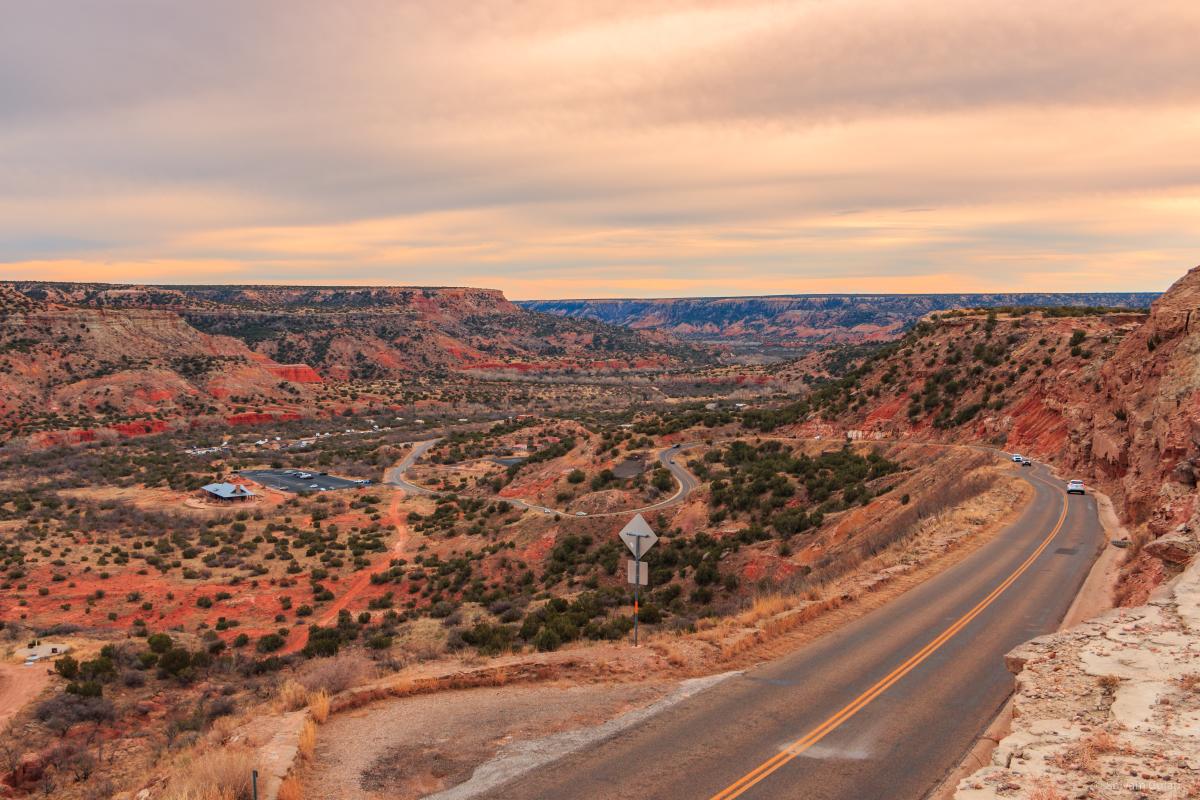
Every city has a layer of knowledge that does not show up in relocation guides — the stuff you learn in the first two years, usually the hard way. Here is Amarillo's, from someone-who-lives-here perspective: the wind, the hail, the sunsets, the food, and the reason a city of 200,000 has hospitals sized for a million.
Jump to
The weather
1. The wind is the first thing everyone warns you about, and they are right
Amarillo is among the windiest cities in the United States. Newcomers assume this is an exaggeration. It is not. It is a daily condition, not a weather event, and it shapes more of daily life than any other single factor — how you park, what you plant, whether you carry an umbrella (you do not; it will invert), and whether outdoor dining is viable on any given afternoon.
2. Spring is the hard season, not summer
People moving from Houston or Dallas brace for summer. The season to brace for here is spring: peak wind, dust events, and the height of severe storm activity. Locals will tell you that if April does not break you, nothing will. It is the honest test of whether the Panhandle works for you.
3. Everyone knows their insurance deductible by heart
The Panhandle sits in an active hail corridor, and roofs here are a recurring capital expense rather than a thirty-year event. Most policies apply a wind and hail deductible of 1% to 2% of insured value rather than a flat dollar amount — meaning $2,500 to $5,000 out of pocket on a typical home. Locals know this number. Newcomers find out during their first storm.
4. Roofing trucks after a storm are a local season
Within 48 hours of a significant hail event, out-of-state roofing crews arrive in force. The local advice is consistent: use an established local roofer with a physical address you can find in five years, not the truck that knocked on your door. Storm-chaser contractors leave when the work does, and warranties leave with them.
5. Low humidity makes the heat genuinely tolerable
This is the pleasant surprise. Amarillo sits at roughly 3,600 feet in a semi-arid climate. Ninety-five degrees here is a fundamentally different experience than ninety-five in Houston. Evenings cool off meaningfully, which means summer nights outdoors are actually comfortable — something much of Texas cannot claim.
6. Winter is real, and Texans from elsewhere underestimate it
Amarillo gets genuine cold, periodic snow, ice storms, and occasional blizzard conditions that close I-40. Elevation and open exposure make wind chill a serious factor. Keep an actual winter coat, not a Texas winter coat. Locals keep blankets and water in the vehicle from November through March.
7. Four real seasons is part of the appeal
Set against the drawbacks: Amarillo gets four distinct seasons instead of the eight-month summer that defines much of the state. Fall is the consensus best season — mild, clear, and comparatively calm. Locals plan their outdoor life around October.
Geography and getting around
8. You can cross the entire city in about 20 minutes
There is no meaningful rush hour. I-40 runs east-west, I-27 runs south, Loop 335 rings the perimeter, and most cross-town trips take 15 to 20 minutes. People relocating from DFW, where average commutes exceed 36 minutes each way, consistently name this as the single biggest quality-of-life change — larger than the housing savings.
9. "Fifteen minutes away" means fifteen minutes
A related point that takes transplants a while to trust. When a local says something is fifteen minutes away, no traffic variable is embedded in that estimate. Canyon is fifteen minutes. Palo Duro is thirty. Those numbers hold on a Friday at 5 p.m.
10. Palo Duro Canyon is a Tuesday evening, not a vacation
The second-largest canyon in the United States sits about thirty minutes southeast, with more than thirty miles of trails. Visitors treat it as a destination. Locals treat it as a park — an after-work hike, a weekend bike ride, a place to take out-of-town family. That casual access is the single most underrated thing about living here.
11. The canyon appears out of nowhere, and it never stops being strange
You drive across flat plains with visibility to the horizon, and then the ground simply opens up 800 feet. There is no foothill, no gradual approach, no warning. Residents who have lived here thirty years still describe the first view of the rim as disorienting.
12. Amarillo is closer to four other states than to most of Texas
Dallas is about 360 miles. Denver is roughly 425. Albuquerque is around 290. Amarillo is geographically closer to parts of Oklahoma, New Mexico, Kansas, and Colorado than to Houston or San Antonio. Culturally, the city has more in common with the High Plains than with East Texas, and locals are aware of it.
Culture and identity
13. The sunsets are the compensation
Flat terrain, high elevation, big sky, and enough dust in the air to scatter light produce sunsets that are genuinely exceptional. Locals photograph them constantly and are entirely unembarrassed about it. When residents are asked what they would miss if they left, the sunsets come up more than any landmark.
14. Route 66 is a neighborhood, not a museum
Route 66 runs the full width of the city, but the Sixth Street Historic District is the only publicly designated stretch — and unlike a lot of Route 66 preservation, it functions as a working neighborhood. Antique shops with genuine old Texas material, bars, live music, coffee shops, restaurants. Locals go there because it is good, not because it is historic.
15. Cadillac Ranch is for visitors, but locals still take people
Ten Cadillacs buried nose-down since 1974, free, open around the clock, graffiti encouraged. Residents do not visit for themselves. They visit constantly because every out-of-town guest wants to go, and everyone keeps a can of spray paint in the garage for exactly this purpose. Local trivia: the cars sit at the same angle as the sides of the Pyramids of Giza.
16. The Big Texan is kitsch, and locals are fine with that
Open since 1960, with the 72-ounce steak challenge — finish it plus the shrimp, salad, roll, and potato in an hour and it is free, otherwise $72. Roughly eight people a month succeed. Locals do not eat there weekly, but nobody is cynical about it either. It is part of the city's identity, and the free longhorn-hooded limo ride is a genuinely good bit.
17. Agriculture is not background — it is the economy
Agriculture generates more than $4 billion annually across the Panhandle and employs over 33,000 people regionally. Tyson's Amarillo beef plant is one of the largest in the country with roughly 4,000 employees, and a $670 million Producer Owned Beef facility is under construction. Cattle prices are local news here. Drought is a civic concern, not a headline from somewhere else.
18. Pantex is the quiet giant nobody outside the region knows about
The nation's primary facility for the final assembly, dismantlement, and surveillance of nuclear weapons sits just northeast of the city. It employs roughly 4,600 people, making it the area's largest private-sector employer, and it is partly powered by one of the largest federal wind farms in the country. Locals treat it as ordinary — it is simply where a lot of people work. The rest of the country has generally never heard of it.
Food and daily life
19. Steak here is an industry, not a gimmick
Amarillo is one of the largest cattle and beef processing centers in the United States. That shows up at local butchers and steakhouses in a way it does not in cities where beef arrives on a truck from somewhere else. Locals buy from local processors and have opinions about it.
20. The green chile cheeseburger is the actual local dish
New Mexico is close enough that green chile is part of the Panhandle food vocabulary. The green chile cheeseburger — at Coyote Bluff, at Golden Light, at a dozen other places — is what locals recommend when someone asks what to eat that is not a 72-ounce steak. Golden Light Cafe on Sixth Street is the Route 66 institution, with live music in the attached cantina.
21. There is a real local food scene if you look past the interstate
The I-40 corridor is chains. The city is not. Tacos Garcia for homemade Mexican, Drunken Oyster for New Orleans-inspired seafood on the west side, Arnold's Burgers for no-frills burgers and outsized pies, and Pondaseta Brewing for local beer and community fundraisers. Locals have strong preferences among these and will tell you.
22. Sod Poodles games are the civic gathering
The Double-A Amarillo Sod Poodles play at Hodgetown, a downtown ballpark that opened in 2019 and has done more for downtown revitalization than any other project. The name — regional slang for a prairie dog — tells you the franchise understands its audience. For newcomers, a game is the fastest way to read the city's personality.
Practical local knowledge
23. The healthcare is better than the city size predicts
Because Amarillo serves as the commercial hub for a region spanning the Texas Panhandle, eastern New Mexico, and the Oklahoma Panhandle, its medical infrastructure is sized for that region rather than for 200,000 people. BSA Health System, Northwest Texas Healthcare System, and the Texas Tech University Health Sciences Center at Amarillo — with programs in medicine, nursing, pharmacy, pharmaceutical sciences, and physical therapy — deliver specialist access a city this size would not otherwise support. Healthcare costs run roughly 18% below the national average.
The same regional-hub logic explains the retail base, the airport, and why Amarillo has amenities that surprise people who only looked at the population number.
24. The school district line does not follow the city line
This is the single most consequential piece of local knowledge for anyone buying a house. A substantial portion of southwest Amarillo is served by Canyon ISD — widely regarded as the region's strongest district — despite carrying an Amarillo address. Amarillo ISD covers roughly 70 square miles across Potter and Randall counties. Bushland ISD serves the west side and draws families specifically.
Two houses on the same street can feed different districts. Locals know to check by address. Newcomers assume the neighborhood name tells them, and it does not.
25. Your property tax rate depends on which part of town you are in
The final thing locals know that relocation guides do not mention: the effective property tax rate varies meaningfully inside the city. The 79104 ZIP carries a median effective rate near 1.98%, while 79108 sits around 1.29% — a spread of nearly 0.7 percentage points, driven by school district and assessment boundaries. The citywide median in Potter County runs around 1.58%.
On a $250,000 home, that spread is the difference between roughly $3,225 and $4,950 a year. Locals also know to file the homestead exemption immediately and to check the assessed value against comparable sales each spring — the appeal deadline with the Potter-Randall Appraisal District is typically mid-May.
The short version
| What newcomers expect | What locals know |
|---|---|
| Summer will be brutal | Spring is the hard season; low humidity makes summer manageable |
| Flat and featureless | Palo Duro Canyon is 30 minutes away and 800 feet deep |
| Cheap house, cheap carrying costs | Taxes and hail insurance run above what the price suggests |
| Small city, limited healthcare | Regional hub infrastructure serving half a million people |
| The neighborhood determines the school | The specific address determines the school |
| Shop for an electricity plan | Xcel is the regulated provider — no plan shopping |
| A stop on the way somewhere | The commercial center of a three-state region |
Considering a move to Amarillo?
The two items that most often surprise relocating buyers are the school district boundaries and the wind-and-hail insurance structure. Both are worth settling before you tour, not after.
[PARTNER CTA — insert brokerage name, agent, phone, email, and site URL]
Frequently asked questions
What is it really like living in Amarillo, TX?
Affordable, windy, and far more convenient than its size suggests. Housing runs about 42% below the national average, most cross-town trips take under 20 minutes, and regional-hub healthcare and retail exceed what a 200,000-person city would normally support. The wind and hail risk are the genuine drawbacks.
Is the wind in Amarillo really that bad?
Yes. Amarillo is among the windiest cities in the country, and it is a daily condition rather than a seasonal one. Spring is the worst, with sustained high winds and dust events. It is the most common complaint from people who move here.
What do people in Amarillo do for fun?
Palo Duro Canyon for hiking and biking, Sod Poodles games at Hodgetown, the Sixth Street Route 66 district for music and nightlife, the Discovery Center and Wonderland for families, and local restaurants and breweries. Many residents treat Palo Duro as a weekly park rather than an occasional destination.
Why does Amarillo have such good hospitals for its size?
Amarillo is the commercial hub for the Texas Panhandle, eastern New Mexico, and the Oklahoma Panhandle. Its medical infrastructure — BSA Health System, Northwest Texas Healthcare System, and the Texas Tech University Health Sciences Center — is sized for that multi-state region rather than for the city's own population.
What is the biggest mistake people make when moving to Amarillo?
Two: assuming the neighborhood name tells them the school district, and underestimating homeowners insurance. Canyon ISD serves much of southwest Amarillo despite the Amarillo address, and wind-and-hail deductibles are typically 1% to 2% of insured value rather than a flat amount.
Figures reflect third-party data sources current at time of writing and change over time. Verify tax rates, school assignments, and insurance costs for any specific property.
FROM OUR BLOG

Golf Courses in Amarillo, TX: The Complete Guide
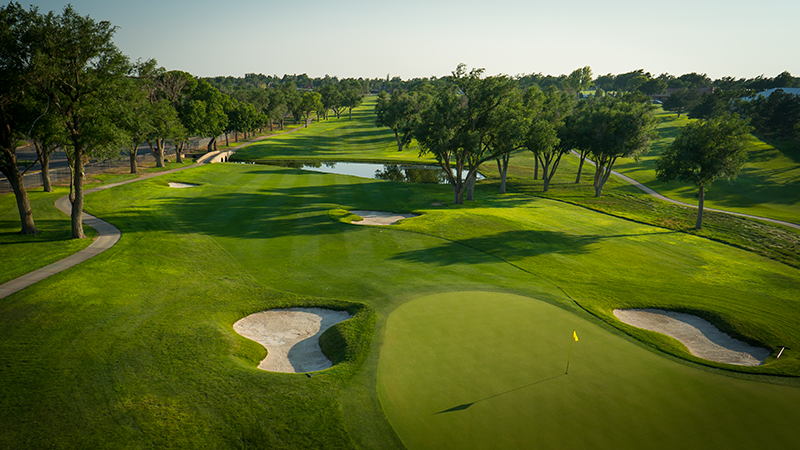
Golf Courses in Amarillo, TX: The Complete Guide Amarillo is one of the best-kept secrets in Texas golf, and the reason is simple: the City of Amarillo owns two full 36-hole complexes and runs them well. That is 72 holes of municipal golf in a city of 200,000 — a ratio almost no metro in the s

Schools in Amarillo, TX: A Complete Guide to Districts, Campuses, and Ratings
Schools in Amarillo, TX: A Complete Guide to Districts, Campuses, and Ratings Amarillo is served by five public school districts, two charter networks, and four established private schools. The district boundaries do not follow city limits, neighborhood names, or any intuitive landmark — which
Best Areas Around Amarillo for Acreage and Country Living
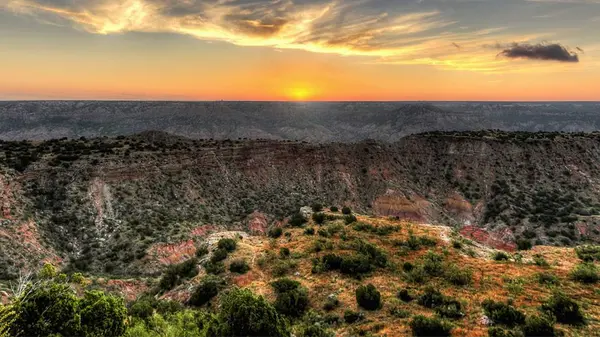
Best Areas Around Amarillo for Acreage and Country Living One of Amarillo's underrated advantages is how quickly the city ends. Fifteen minutes in almost any direction puts you on real acreage — with a shop, room for horses, and a canyon view if you pick the right direction. Here are the areas w